Remote Property Viewing in Georgia, Done Properly
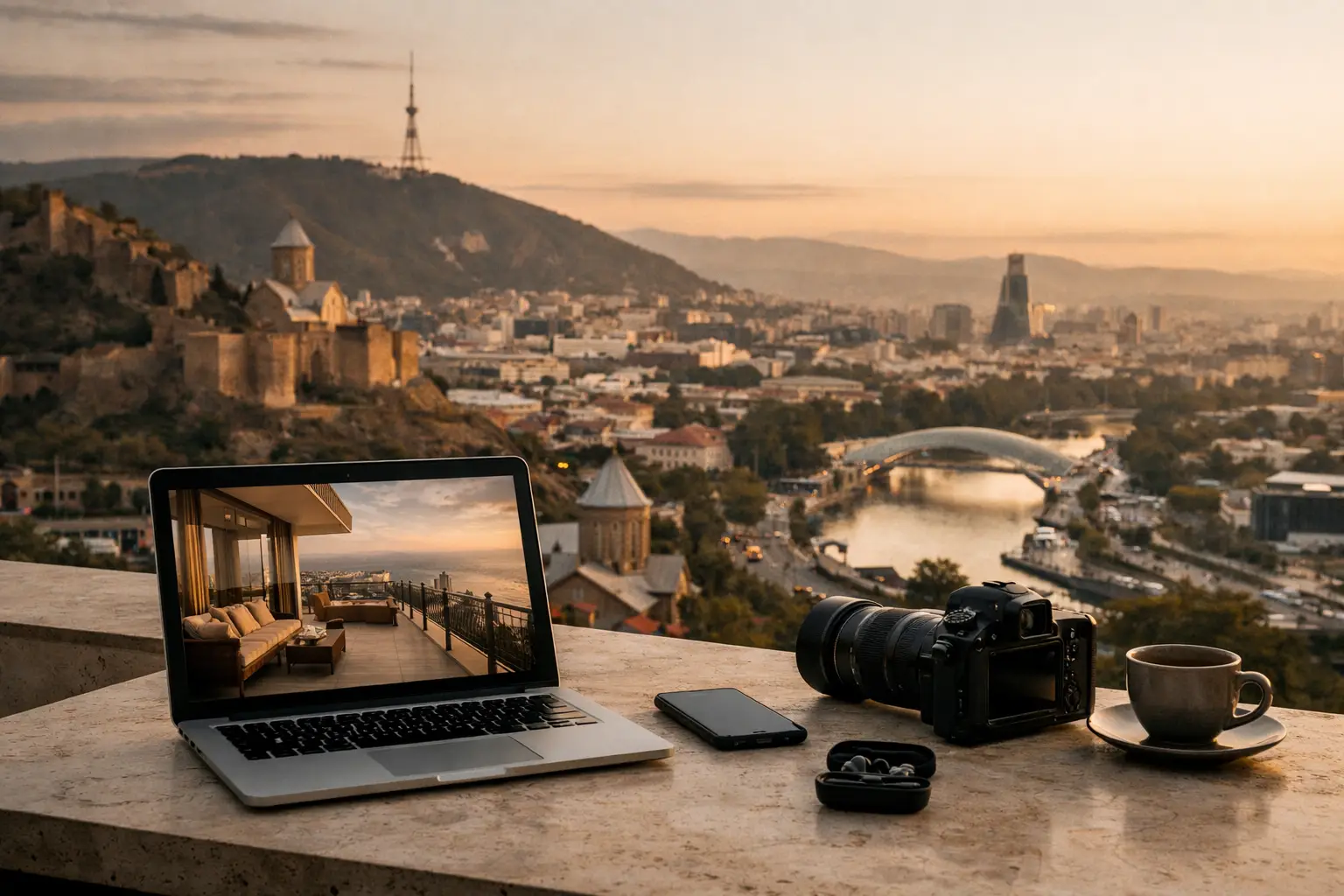
A polished listing can make a 14th-floor apartment look quiet, bright, and five minutes from everything. A live camera often tells a different story: traffic below the balcony, a dark hallway, construction next door, or a steep walk from the main road. That is why remote property viewing in Georgia should be a decision tool, not a replacement for an inspection you hope to do later.
Most buyers I work with start outside the country. Some are comparing a $90,000 Batumi holiday apartment with alternatives in Turkey. Others need a Tbilisi rental now and may buy after several months. The practical question is the same: what can you verify from abroad before you spend money on a flight, a reservation, or an offer?
Remote property viewing in Georgia is more than a video call
A useful viewing begins before the camera turns on. First, define the job of the property. Is it for personal use several weeks a year, long-term rental, short stays, relocation, or a future resale? A one-bedroom apartment that works for a couple on holiday may not work for a tenant who needs a desk, storage, reliable elevator access, and a proper kitchen.
Your budget also needs a hard ceiling. At $50,000, compromises are normal: location, condition, floor, building quality, or size. At $100,000 to $150,000, there may be more choice, but the best-looking apartment is still not automatically the best purchase. A high floor can improve light and views while making elevator reliability more important. A low floor can be convenient but exposed to street noise and foot traffic.
Before a viewing, I narrow the search to a short working selection, usually five to eight options. Public portals are useful for finding supply. They are not proof that a listing is current, accurately priced, available, or represented by someone who can show it properly. A remote buyer does not need 40 browser tabs. They need a few choices with clear reasons to keep or reject each one.
What the camera should show
A live walkthrough should not start at the front door of the apartment. It should start outside the building. You need to see the street, the entrance, the condition of the common areas, the elevator, the route from elevator to unit, and the actual approach to the building.
For a flat in Tbilisi, I look at the immediate street as carefully as the living room. A quiet interior can sit beside a busy road. A building entrance can be hidden behind parked cars or reached through a poorly lit passage. If the property is advertised as walkable, the viewing should show the walk, not just state it. I can measure the route from the entrance to a metro station, supermarket, school, beach access, or the point that matters for your plans.
Inside, the viewing should be slow enough to answer ordinary questions. Open windows. Stand on the balcony for a minute. Show the ceiling corners, bathroom grout, under-sink plumbing, electrical panel, storage, and every room from several angles. Turn on water and lights. Open cabinets. Show the view in both directions.
These details are not glamorous. They are where expensive surprises sit.
Natural light needs to be shown at the time of the actual visit, not guessed from listing photos. A south-facing window is useful information, but so is a neighboring tower that blocks the light. In Batumi, a sea view may be real from one corner of a balcony and absent from the sofa where you will actually sit. In Kazbegi, the access road and the condition of the approach can matter as much as the mountain view.
There is a limit to remote video. A camera cannot fully convey smell, dampness behind a wall, the feel of a poorly built floor, or how a neighborhood changes at night. I say that directly when the evidence is not enough. The purpose is not to make every property look acceptable. It is to eliminate weak options early and reserve further work for the ones that hold up.
The questions that change a buying decision
A remote viewing becomes useful when it is paired with the questions that listing photos avoid. For a residential buyer, that usually means condition, building operations, surrounding noise, practical access, likely tenant appeal, and the true cost of making the place usable.
If the apartment is being considered as a rental, the conversation must move beyond an advertised monthly rate. Ask who would rent this exact unit and why. A compact apartment near daily services may suit a long-term tenant. A holiday apartment needs a different logic: arrival convenience, layout, building operations, and whether guests will accept the location after seeing it in person.
Gross income figures can sound attractive because they exclude the parts that reduce actual cash flow. Empty periods, utilities, cleaning, repairs, furnishing, management, and the time required to coordinate them all matter. I calculate the picture in plain numbers and leave the uncertainty visible. If the result only works under an optimistic occupancy assumption, that is a risk, not a selling point.
For a relocation buyer, it often makes sense to rent first and use remote viewings to avoid a poor first lease. A family may care less about a view and more about elevator access, a stroller-friendly entrance, nearby groceries, and the daily drive. A person working from home may need quiet at 2 p.m., not just a stylish lobby.
For commercial tenants, remote viewing has a different checklist. The storefront must be shown from across the street and from the direction customers will approach. Ground-floor visibility, usable frontage, delivery access, power capacity, and whether the space can support the intended operation should be discussed before anyone treats a low rent as a bargain. A beautiful room with no practical access is still the wrong room.
A clear process avoids false certainty
The process should be simple. You send a brief with the city, budget, purpose, timing, and non-negotiables. I return a focused selection rather than a catalog dump. We remove weak options before live viewings, then inspect the finalists by video with the camera on the details that matter to you.
After the viewing, you should receive a direct assessment. Not every property deserves a second call. I will tell you if a unit is overpriced for its condition, if a stated distance feels inconvenient in practice, or if the building creates a risk that the photos did not show. I also check the ownership record and visible restrictions before a buyer treats a property as a serious candidate. A good video does not make a weak deal safe.
Negotiation comes after the property has earned your attention. The strongest negotiating position is not vague enthusiasm. It is a clear view of competing options, defects, costs, and the seller's actual asking position. Remote buyers are often assumed to be less informed. That is exactly why the preparation has to be better.
When a flight is still worth taking
Remote viewing can reduce wasted travel. It cannot remove every reason to visit. A final in-person trip is sensible when you are choosing between two close options, buying for your own long stays, or making a decision where street feel matters heavily. It is also sensible when a property has unusual features that video cannot test well.
But a flight should be for a short list, not for starting from zero. If you arrive with two or three verified candidates, you can spend your time checking how the place feels rather than chasing listings that disappeared last week.
A remote purchase should feel less like buying from a screen and more like having someone on site ask the questions you would ask yourself. Describe your task, city, budget, and timeline in a Telegram message to @ShalinAE, and I will tell you what can realistically be checked before you travel.