Batumi Hotel Apartment Versus Residential Compared
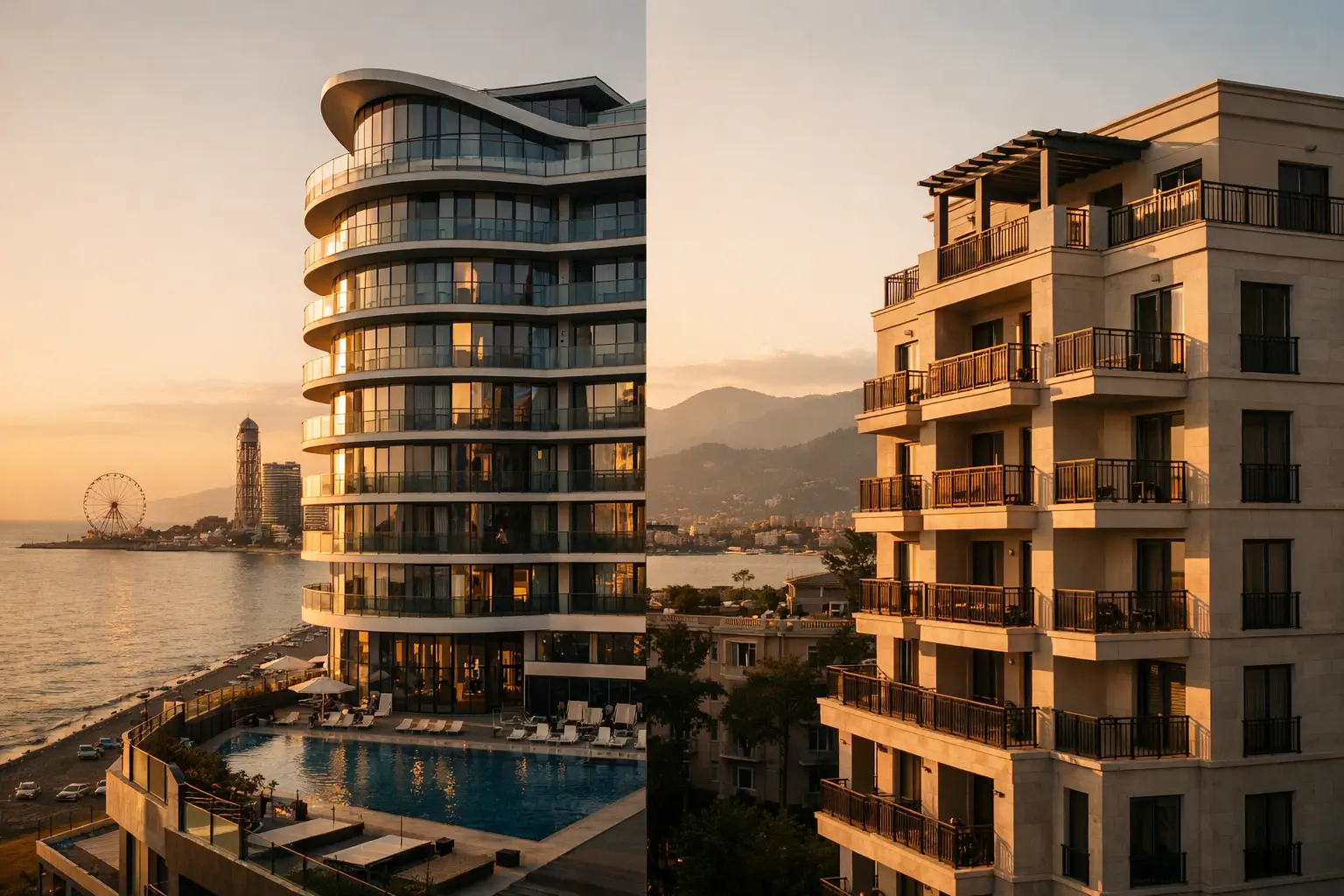
A sea-view unit can look identical in photos whether it is sold as a hotel apartment or a residential apartment. The difference appears after the keys are handed over: who controls bookings, whether you can stay in August, what the building permits, and what the next buyer is actually purchasing. For buyers comparing a Batumi hotel apartment versus residential property remotely, that distinction matters more than the lobby, the pool, or the advertised nightly rate.
I would not start with the label on the listing. In Batumi, “hotel apartment” is used for several different products. Some are units inside a functioning hotel with a central operator. Some are apartments in a tall tower where individual owners arrange rentals independently. Others are ordinary residential units furnished in a hotel style. Those are not the same investment or the same holiday home.
Start with how you will use the apartment
A hotel apartment suits an owner who wants a relatively hands-off stay-and-rent arrangement. You may arrive for a few days, leave the keys with reception, and expect someone else to handle guest communication, cleaning, and check-in. That convenience has a price: you usually accept less control over the calendar, furnishings, rental strategy, and sometimes the condition of the unit after a busy season.
A residential apartment suits an owner who wants the flat to work primarily as their own place. This is often the clearer choice for a family spending several weeks in Batumi, a relocator renting first and buying later, or a buyer who wants the option to rent long-term rather than depend on short stays. You choose the furniture, decide when the apartment is available, and can change the rental approach without asking a hotel desk.
The practical question is simple: if the apartment earned nothing for a period, would you still be happy owning it? If the answer is yes because you want a place near the sea for personal use, residential often makes more sense. If your priority is operational convenience and you accept tighter rules, a hotel format can fit.
Batumi hotel apartment versus residential: what you own in practice
Do not assume a hotel apartment includes hotel service just because the building has a reception desk. Ask what is written into the operating arrangement. Is there a mandatory manager? Can you rent the unit yourself? Can you use another manager? Is the apartment placed into a shared rental pool, or does its income depend only on its own bookings?
These details change the economics and the owner experience. A central operator can save time, especially when you live abroad. But the operator's incentives may not match yours. A full hotel needs consistent standards, which can mean restrictions on furniture, linens, renovation, guest access, and personal stays during high-demand dates. If service quality falls, an individual owner has limited ability to fix it alone.
With a residential apartment, control is greater but the work does not disappear. Someone must answer guests at night, inspect the unit after checkout, coordinate repairs, and replace missing items. A remote owner needs a reliable local person, not simply a booking calendar. The most common mistake is treating self-managed short-term rental as passive income because the building is close to the beach.
There is also a middle ground. Some residential buildings have concierge services and allow owners to use a third-party manager. This can be useful, but the building rules still matter. A concierge is not necessarily a hotel operator, and an owner-funded cleaning team is not the same as a managed rental program.
The building can matter more than the unit
A 40-square-meter apartment on a high floor may have a dramatic view. It may also have long elevator waits in July, wind on the balcony, and a building full of suitcases, delivery riders, and short-stay guests. A polished render will not tell you how the entrance feels at 10 p.m. or whether the elevators are coping with the number of occupied units.
For a hotel apartment, inspect the route from street to room as a guest would. Is reception staffed around the clock? Is there space for taxis to stop? Are luggage carts, housekeeping, and guest storage actually organized? A hotel concept depends on operations, not only architecture.
For a residential apartment, pay attention to the everyday details: elevator condition, parking access, hallway noise, water pressure, insulation, and the mix of owners and short-term guests. A building can be attractive for weekend visitors yet tiring for a family living there for several months.
Floor level needs a realistic view as well. Higher floors can sell a panorama, but they increase dependence on elevators and may make balconies less usable in strong weather. Lower floors are easier to access but can bring street noise and less privacy. There is no universally best floor. The right choice depends on whether the buyer values a holiday view, a practical base, or a property that must appeal to future tenants and buyers.
Rental flexibility is not the same as rental demand
Many buyers see a furnished hotel-style studio and assume it can earn from day one. It may be available for bookings, but availability is not demand. Batumi has a strong seasonal rhythm. A property that photographs well in summer may have a very different occupancy pattern outside the main travel period.
Hotel apartments can benefit from a recognized front desk, centralized marketing, and guest trust. They can also face direct competition from hundreds of nearly identical units in the same building. When every owner has the same layout, the same view direction, and the same online photos, price becomes the easiest way to compete.
Residential units have more flexibility. A one-bedroom apartment with a proper kitchen, storage, and a comfortable work area may appeal to longer-stay guests or tenants who do not want a hotel room. But this only helps if the apartment is furnished for real life rather than for listing photos. A decorative bar stool does not replace a dining table. An open balcony does not replace storage for luggage and winter clothes.
I would be cautious with any proposal based only on a high-season nightly rate. Ask to see the full operating picture: owner-use restrictions, management terms, cleaning responsibility, recurring building charges, furnishing replacement expectations, and how the apartment is marketed outside peak months. A number without those conditions is not a decision.
Resale buyers look for different things
A residential buyer often asks whether they could live there comfortably. They notice layout, kitchen quality, heating and cooling, light, noise, and whether the building feels stable year-round. This gives a well-planned residential unit a broader pool of potential future buyers.
A hotel apartment resale buyer usually asks a different set of questions. Is the operator still active? What are the owner rules? Can the unit be rented independently? Is the furniture package current, and is the building still competitive against newer towers? If the value proposition relies heavily on a brand or an operator, the next buyer will assess that relationship closely.
Neither route is automatically easier to sell. A generic residential studio with no storage and an awkward layout can be hard to move. A well-run hotel unit in a property with clear operations can be straightforward. The risk comes when the sales pitch and the real product do not match.
A short decision test before making offers
Before discussing specific apartments, write down four answers: how many weeks you expect to use the property each year, whether you want short stays or long-term tenants, how much operational control you are willing to give up, and whether your likely future buyer is another investor or a person who wants to live there.
If personal use is flexible, you want someone else to coordinate guests, and you are comfortable with a formal operating structure, a hotel apartment deserves serious consideration. If you want to choose your own tenants, use the apartment whenever you want, and preserve the option of ordinary residential living, prioritize a residential unit.
The real drawback of hotel apartments is reduced control. The real drawback of residential apartments is that control becomes your responsibility. Buyers often underestimate one of these two costs because neither is visible in a sea-view photograph.
Send your task on Telegram to @ShalinAE: budget, intended use, preferred dates for personal stays, and whether you want a hotel-operated unit or a residential apartment. I will tell you directly which questions to ask before you spend time on viewings.