How to Furnish a Rental Apartment in Tbilisi
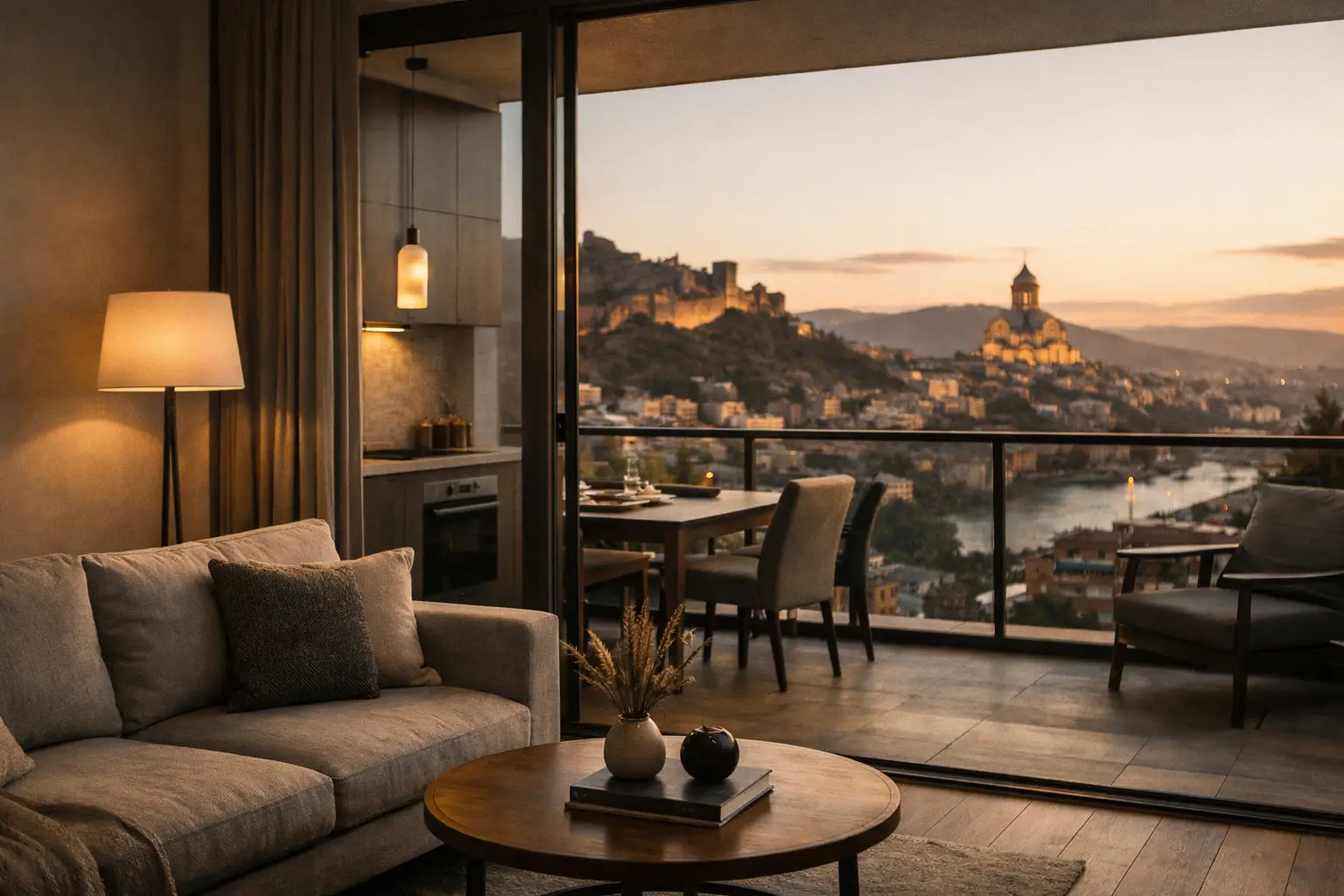
A vacant apartment can look ready on a video call and still fail its first viewing. The usual reasons are simple: no place to work, weak lighting, a kitchen without basic equipment, or furniture that does not fit through the elevator. If you plan to furnish a rental apartment in Tbilisi from abroad, treat it as an operating project, not a shopping trip.
The aim is not to make the apartment look expensive in photos. It is to make the right tenant understand, within five minutes, how daily life will work there. That means a usable bed, storage, reliable appliances, a table that can serve as a workspace, and an apartment that is clean and complete when the keys are handed over.
Start with the tenant, not the sofa
A furnishing plan changes according to the rental strategy. A one-bedroom intended for a single professional needs a proper desk or a table with a comfortable chair. A family tenant will notice wardrobe space, a washing machine, blackout curtains, and whether there is a safe place for a child to sleep. A short-stay apartment needs more duplicate linens, durable surfaces, and simpler replacement items.
Trying to serve everyone usually produces an apartment that feels unfinished to everyone. A huge sectional sofa may photograph well but consume the only area where a tenant could work. A second decorative armchair can be less useful than a narrow wardrobe. First decide who should rent the apartment and for what length of stay. Then buy for that person.
For a standard long-term rental, the practical minimum usually falls into five groups:
- Sleeping: a solid bed, decent mattress, bedside lighting, curtains, and enough linens to show the setup properly.
- Kitchen: refrigerator, cooktop, oven if the apartment has space for one, kettle, cookware, plates, glasses, cutlery, and a dining table.
- Laundry and cleaning: washing machine, drying rack, vacuum, mop, ironing board, and basic cleaning tools.
- Work and storage: a desk or suitable table, chair, wardrobe, hangers, and shelves where they are genuinely needed.
- Comfort and safety: air conditioning where required, working locks, smoke detector if appropriate for the property, lamps, and a clear way to control hot water and heating.
This is not a luxury package. It is the baseline that prevents the tenant from making an immediate list of purchases after move-in.
Furnish a rental apartment in Tbilisi by measuring first
I have seen wardrobes ordered from a showroom that could not pass the apartment door. I have also seen a washing machine installed where its door could not open fully because of the bathroom layout. These are avoidable costs, but only if someone measures the apartment before placing orders.
Ask for a room-by-room measurement sheet, including ceiling height, wall lengths, outlet positions, pipe locations, window opening direction, elevator dimensions, stair turns, and the width of the entrance door. Photos alone are not enough. A wide-angle lens makes a narrow living room look larger than it is.
The kitchen deserves its own check. Confirm the exact appliance spaces, ventilation openings, water supply, drainage, electrical sockets, and circuit capacity. Do not assume a built-in appliance will fit because the cabinet has a gap that looks close to the right size. A few centimeters can mean a return, a carpenter visit, and a delayed launch.
Also check building access before scheduling delivery. Some Tbilisi buildings have small elevators, limited loading space, or a concierge who will not allow bulky deliveries at certain hours. An apartment on a higher floor without convenient elevator access can add labor cost and slow down installation. It is not dramatic, but it needs to be in the budget and timetable.
Build the budget in layers
The visible furniture is only one part of the cost. Owners often approve a sofa, bed, table, and appliances, then discover that curtains, delivery, assembly, lamps, cookware, mirrors, bathroom accessories, and cleaning materially change the final number.
Use three separate budget lines. The first is for durable items: appliances, bed frame, mattress, sofa, wardrobes, tables, and chairs. The second is for completion: lighting, curtains, kitchen equipment, linens, small appliances, storage, and decor. The third is contingency for replacements, installation changes, missing parts, and extra labor.
Do not furnish purely by the lowest sticker price. A cheap bed frame that starts creaking after several tenant changes is not cheap. At the same time, there is no reason to put a designer dining set into a rental where the expected tenant will value a dishwasher or extra storage more. Spend where use is heavy: mattress, sofa, chairs, washing machine, refrigerator, air conditioning, and window coverings.
Keep every invoice and make a simple inventory with photos. It helps with handover, future repairs, insurance conversations if applicable, and deciding what needs replacement between tenants. It also stops the common remote-owner problem of paying twice for an item that was already bought but never recorded.
Choose materials that survive real use
Rental furniture does not need to look generic. It does need to tolerate luggage, pets where allowed, frequent cleaning, and tenants who may not treat it like their own home.
Choose washable upholstery, simple upholstery colors, tables with protected surfaces, and beds with accessible replacement parts. Avoid fragile glass coffee tables in compact apartments, especially when the walkway is already tight. Open shelving can look good in listing photos, but it gathers dust and gives tenants less concealed storage than they expect.
Curtains are often treated as decoration. They are functional. In bedrooms, proper blackout curtains can matter more to a tenant than another piece of wall art. In living areas, choose fabric that provides privacy without making the room dark. Check the curtain track, wall strength, and window placement before buying custom lengths.
There is a trade-off with built-in furniture. A custom wardrobe may use an awkward niche well and make the apartment look finished. But it takes longer, requires accurate measurements, and is harder to correct if the design is wrong. Freestanding furniture is quicker to replace and easier to move, but may waste valuable space. The right answer depends on the room, not on a fixed rule.
Treat setup day as a handover, not the finish line
Furniture delivery is not the end of the job. It is the point when details become visible. Test every appliance, turn on every light, run the washing machine, check air conditioner remotes, inspect plumbing connections, and make sure cabinet doors and drawers open fully.
Then prepare the apartment for a tenant rather than for the owner. Remove packaging, wipe inside cabinets, label spare keys, place appliance manuals together, and photograph each room after cleaning. Make an inventory that records the condition of furniture, appliances, walls, and flooring. The tenant should receive it before signing, not after a disagreement appears.
Good listing photos come after this check, not before. A bed without pillows, a bathroom without a mirror, or cables hanging beneath a television can make a fully furnished apartment look unfinished. More importantly, these small gaps signal that maintenance may be difficult later.
Manage the work remotely without losing control
Remote furnishing works when decisions are organized. It does not work well when the owner approves individual purchases through scattered messages for three weeks. Start with one written brief: target tenant, maximum budget, move-in date, style direction, and items that are non-negotiable.
Request a proposed item list before purchases begin. It should show quantities, dimensions, finish or color, price, delivery status, and what remains unpriced. Ask for photos and videos at three points: before work starts, after major deliveries, and after final cleaning. A final video should show appliances operating, not just staged rooms.
The risk is not only overspending. A rushed setup can leave you with mismatched furniture, unavailable replacement items, or an apartment that loses weeks because one missing component delays the photos and viewings. Say it directly: a controlled two-week plan is usually better than a frantic attempt to complete everything in three days.
If you want a second pair of eyes, Anatolii Shalin can inspect the apartment in person, check the measurements against the plan, and document the finished setup before it is offered for rent.
Send your apartment layout, photos, target tenant, budget range, and required move-in date on Telegram. I will tell you what should be bought first, what can wait, and where the plan may create an expensive problem.