Georgia Versus Turkey Property: A Buyer’s Choice
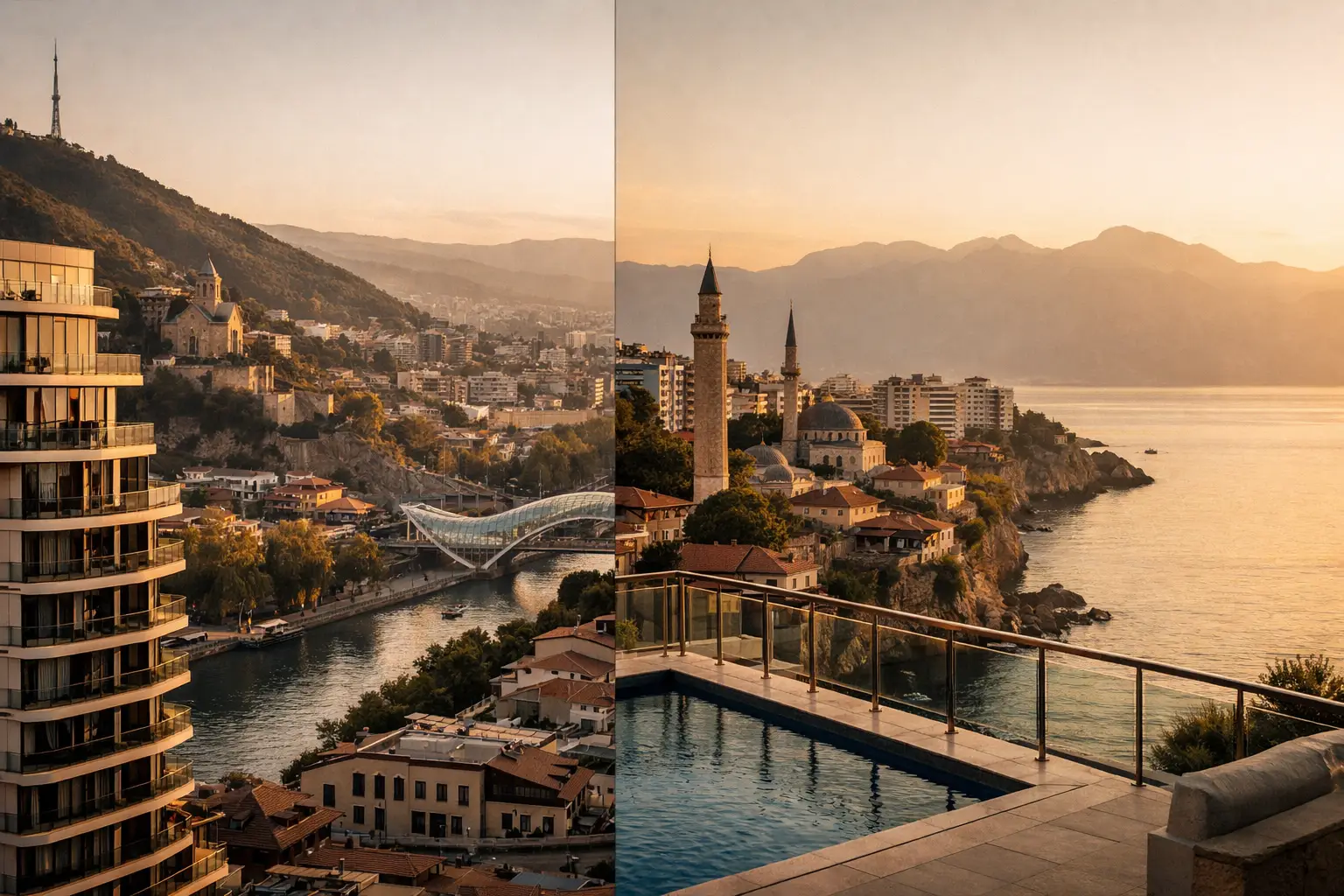
A buyer comparing Georgia versus Turkey property is usually not choosing between two similar apartments. They are choosing two different operating models. One may offer a familiar resort setting, broad international recognition, and easy holiday use. The other may offer a simpler, smaller market where a buyer can see more of what is actually happening around a building.
That difference matters after the reservation deposit is paid. Who will open the apartment when a guest arrives late? How long is the empty period between seasons? Can you sell without waiting for the right foreign buyer? Is the apartment somewhere you would personally use if rental demand weakens? These are the questions worth answering before comparing brochure views and advertised returns.
Georgia versus Turkey property: start with your real use
Turkey suits buyers who want a large, established holiday market and a place they expect to use often. Antalya, Alanya, Bodrum, and Istanbul serve very different buyers, but each has a recognizable international profile. For an Israeli or Gulf buyer, direct flight options and a familiar resort routine can carry real weight. For a European buyer, Turkey can also feel easier to explain to family or a future resale buyer.
Georgia is usually a more deliberate choice. Batumi attracts buyers looking for Black Sea access, a compact city, and a lower entry budget than many Turkish coastal markets. Tbilisi is not a beach substitute. It is a year-round capital city choice for people who may rent, relocate, work remotely, or hold a second base in the region. Kazbegi is a lifestyle purchase first. It can be attractive, but mountain weather, access, and a smaller pool of tenants make it unsuitable for anyone expecting passive income every month.
A $50,000 to $150,000 budget can work in either country, but it does not buy the same thing. In Turkey, that budget may lead to an older resale apartment, a smaller unit, or a location farther from the water than the listing headline suggests. In Georgia, it may buy more space or a newer building, but the building can sit on a street with weak pedestrian appeal, active construction, or an unfinished block beside it. Square footage is not the decision. Daily usability is.
The location test is different in each market
In Turkish resort cities, buyers often focus on distance to the beach, airport access, complex facilities, and whether the neighborhood remains active outside peak holiday periods. A unit advertised as “near the sea” can still mean a 20-minute walk uphill in summer heat. A large pool and gym look good in a sales office but do not solve a poor street, limited nearby services, or high common-area upkeep.
In Batumi, the view and floor can change the whole equation. An apartment on the 20th floor with a clear sea view may rent differently from a similar unit on the fourth floor facing another tower. But buyers should also stand at the window, not only look through it. Construction noise, a future tower site, traffic, wind, and the true walking route to the promenade all affect how guests experience the property.
Tbilisi should be assessed as a working city. The key question is not whether an apartment looks good in photos. It is whether a tenant can live there comfortably through an ordinary week: grocery access, parking, road noise, elevator condition, heating, and the trip to the places they actually need to reach. A beautifully renovated apartment can stay vacant if the building entrance is poor or the street is difficult at rush hour.
The drawback in both countries is that attractive new inventory can make mediocre locations look better than they are. Fresh lobby finishes and staged furniture are easy to photograph. A noisy road, a dark courtyard, a poorly maintained shared area, or a weak rental micro-location is harder to see remotely.
Rental income is not a country comparison
“Turkey has stronger tourism” and “Batumi has high yields” are both too broad to guide a purchase. Rental performance belongs to a specific apartment, in a specific building, with a specific owner plan.
A resort unit needs someone to handle messages, cleaning, keys, linen, minor repairs, and calendar pricing. If you are buying from the United States, Israel, or Europe, this work does not disappear because the apartment is new. It is simply transferred to someone else. The quality of that person or team will affect reviews, occupancy, and wear inside the unit.
Turkey may have a larger visitor base in major resort areas, but competition can also be heavier. In a large complex, dozens of near-identical apartments can appear online at once. Owners then compete on price, photos, furnishings, and response speed. A low purchase price does not help if the unit becomes one more undifferentiated listing.
Batumi also has a clear seasonality issue. Summer can create strong demand, while the rest of the year requires a more conservative plan. Some apartments work better for medium-term stays than nightly guests. Others are better held for personal use with rental income treated as an offset, not as the reason for buying. This is the honest approach for many sea-view studios.
Tbilisi can offer a more stable tenant base than a holiday market, but it is not automatic. Long-term tenants notice practical details immediately: internet reliability, appliances, natural light, storage, building access, and whether the owner will address problems quickly. A fashionable interior without a functioning home is not an investment advantage.
Resale depends on clarity, not optimism
Turkey has deeper name recognition among international property buyers. That can help the resale conversation, especially in known resort areas and Istanbul. But a broad market also means more alternatives. If your apartment has no clear advantage in location, condition, or usable layout, a future buyer can simply choose another one.
Georgia has a smaller market and fewer layers between buyer and seller. That can be useful when pricing is realistic and the property is easy to understand. It can also mean a narrower exit audience. A niche unit, an awkward layout, an overbuilt area, or a property bought mainly for a promised return may take longer to move.
The best resale question is simple: who is the next buyer? A family that wants holidays? A remote worker? A local renter-owner? An investor seeking managed income? If the answer is vague, the exit plan is vague too.
What remote buyers should compare before choosing
Do not compare only asking price and claimed monthly income. Compare how much supervision the property will require from you after closing. A two-bedroom apartment that works for your own stays may be a better long-term decision than a small studio with a high advertised return but constant turnover.
Also compare the practical friction. Flight frequency matters if you plan to visit twice a year. Language and time zone matter when something breaks. So does the amount of competition within the same building. A building with 300 similar units creates a different management problem from a small residential block with a limited number of apartments.
For some buyers, Turkey is the better choice because personal holidays come first and they value an established resort environment. For others, Georgia is stronger because they want a city base, a Black Sea apartment at a different entry point, or direct visibility into a compact market. Neither country is automatically safer, cheaper, or more profitable. The property must fit the plan.
A good comparison ends with two or three actual candidates, not general opinions about countries. Send your budget, preferred use, target city, and how often you expect to visit on Telegram. I will tell you directly what I would rule out before you spend time on it.