Best Cafe Retail Locations for Tbilisi Footfall
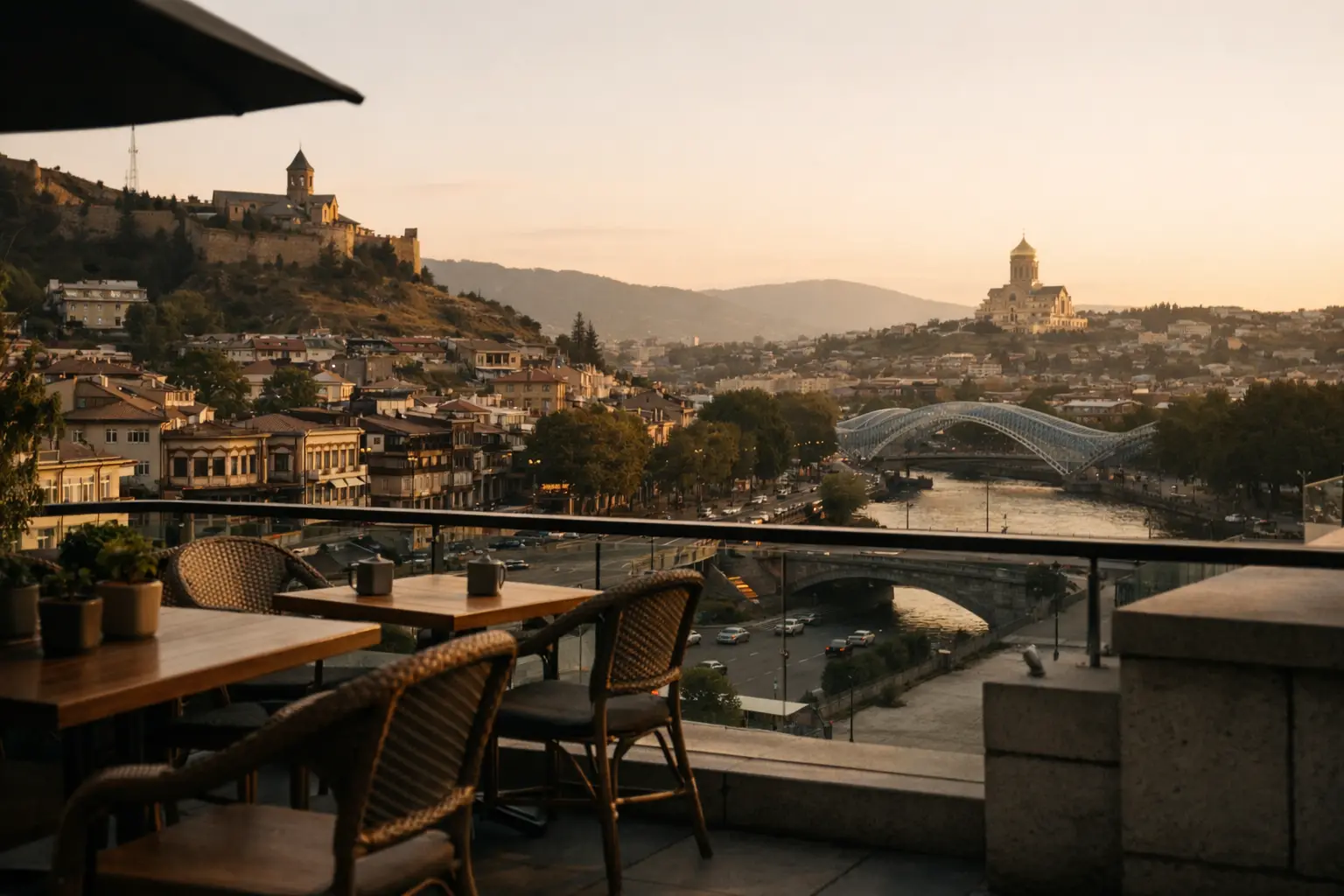
A cafe can look busy for two hours on Saturday and still fail to cover rent from Monday to Thursday. That is why the best cafe retail locations in Tbilisi are not simply the streets with the most people. The right address matches a specific customer: office workers buying coffee before 10 a.m., students staying with laptops, hotel guests looking for breakfast, or residents returning home in the evening.
I look at a cafe location as a working point, not a pin on a map. Who passes the door, at what time, and why are they there? A retail unit can have a famous address and poor trade if it sits on the wrong side of the street, behind parked cars, or ten meters away from the natural walking line.
For an operator choosing remotely, photos and map reviews are not enough. You need an honest view of the frontage, the neighboring tenants, the pace of the street on an ordinary weekday, and the rent that the concept can actually carry.
Best Cafe Retail Locations Start With the Customer
A specialty coffee counter, a family brunch cafe, and a late-night dessert business can all work in Tbilisi. They should not be looking for the same location.
A morning-led coffee concept needs repeat traffic. Offices, clinics, banks, universities, and transport transfer points can create it. In these areas, customers value speed, a clear menu, and a visible counter more than a large dining room. A location near Rustaveli Avenue may have strong name recognition, but the relevant question is whether people walk past your door before work, not whether tourists photograph the avenue at noon.
A brunch or all-day cafe needs a different rhythm. It benefits from residential density, hotels, walkable streets, and customers willing to stay longer. Around Vera, Sololaki, Marjanishvili, and parts of Chavchavadze Avenue, a cafe may draw a mixed crowd. That can be useful, but it also makes positioning harder. If every nearby place offers the same breakfast menu and pale interior, being the fifth version of it is not a location strategy.
For a compact takeaway concept, the best site may be less glamorous: a visible ground-floor unit close to a recurring daily route. The front door matters more than a deep interior. A customer should understand within seconds that coffee is available and where to enter.
Read the Street at Three Different Times
One site visit can mislead you. I would rather watch the same block in the morning, during the weekday lunch period, and after 6 p.m. Each period answers a different commercial question.
Morning footfall shows whether commuters and local workers have a reason to stop. Lunch reveals how many people leave surrounding buildings and whether they buy quickly or sit down. Evening tells you whether the area has residents, diners, gym traffic, theater visitors, or simply goes quiet.
Do not count people without context. A crowded sidewalk beside a metro entrance can be poor for a cafe if passengers are moving too fast, crossing immediately, or entering from the other side. A smaller flow that passes directly along your windows can be more valuable. Watch where people pause, queue, meet, and wait for rides.
The same applies to corners. A corner unit usually gives better visibility, but it can also expose two short frontages instead of one useful entrance. On a sloped street, pedestrians may avoid the uphill side. On wide roads, a cafe can be physically close to a major destination but effectively separated from it by traffic and difficult crossings.
The Unit Must Be Easy to Notice
For cafe retail, the first 30 to 50 feet of approach often decides whether a passerby sees you. Look from both directions. Can a person identify the entrance without stopping? Is the storefront blocked by trees, street kiosks, parked vehicles, signs, or a terrace from the neighboring business?
Ground-floor visibility is not interchangeable with a ground-floor address. Some units are set back behind a courtyard gate. Others sit below sidewalk level, with only a narrow stairwell visible from the street. These spaces can work for a destination concept with a loyal audience, but they are weak for a new cafe that depends on walk-in discovery.
Floor level also changes the business model. A first-floor cafe above a well-known retail entrance may have lower street presence but more room for events, work meetings, or a deliberate destination experience. It should not be priced as if it receives the same spontaneous traffic as a direct street-front unit.
Signage rules set by a building or local authority can limit what the customer sees. Before treating a large window as marketing value, confirm what can actually be displayed and where. A clean facade is useful only if people can recognize the business from the sidewalk.
Nearby Businesses Can Help or Hurt
Neighbors create demand, but they also define expectations. A bakery can bring breakfast traffic. A pharmacy, bank, salon, fitness studio, hotel, coworking office, or supermarket can create repeat reasons for people to be on the block. These are more useful signals than a fashionable street name alone.
Competition is not automatically a reason to walk away. Two or three good coffee businesses may prove that customers are willing to spend there. The risk begins when their offer, price point, hours, and customer base are nearly identical to yours. In that case, the location has already taught the market what to expect, and you will need a real reason to change the habit.
Also check for weak neighbors. A building entrance used mainly for short-term rentals may look active in summer but be inconsistent through the year. A cluster of bars can help an evening dessert concept and hurt a quiet daytime cafe. Construction nearby may create temporary worker traffic, but it can also hide your storefront and make access unpleasant for months.
Rent Is a Location Cost, Not a Trophy
The most expensive streets are not automatically the best cafe retail locations. High rent can be justified when the site produces reliable sales across several dayparts. It becomes dangerous when the entire plan depends on a strong tourist season, a weekend rush, or a future office opening that has not happened yet.
Ask a simple question: how many daily transactions does this exact location need before the business is comfortable, not merely open? Then test that number against observed pedestrian flow, likely conversion, average check, staffing hours, and quiet months. A landlord's asking price does not tell you whether the cafe can carry it.
Lease terms matter as much as the headline rent. An attractive starting rate can lose value if it rises sharply, if the landlord can terminate too easily, or if the unit has limits that conflict with your operating hours. For a first site in a new market, a slightly less prominent address with manageable fixed costs can be the safer decision.
There is another risk remote tenants often miss: a landlord may describe a location by the nearest famous street while the actual entrance faces a side lane. That side lane may be perfectly workable, but it should be priced and evaluated honestly. I would not pay main-street rent for a door nobody sees from the main street.
Match Tbilisi Areas to a Trading Pattern
Tbilisi does not have one cafe market. Rustaveli and nearby central streets can bring tourists, office workers, cultural visitors, and higher expectations on presentation. Chavchavadze Avenue can suit businesses aiming at nearby residents, professionals, and university-related traffic. Pekini Avenue and surrounding business streets may make more sense for quick weekday coffee than for a slow brunch room.
Marjanishvili and Aghmashenebeli Avenue offer visible pedestrian activity and hospitality demand, but the customer mix can change block by block. A site close to a hotel entrance may trade differently from one a five-minute walk away. In Old Tbilisi, character can attract visitors, yet narrow streets and seasonal patterns can make daily trade less predictable.
These are starting points, not verdicts. The better question is always more specific: which side of which block, how far from the nearest demand generator, and what happens there on a rainy Tuesday at 4 p.m.?
What I Would Verify Before Recommending a Site
For a cafe operator, I would inspect the unit in person and record the approach from both directions, the view from the sidewalk, neighboring businesses, and the condition of the frontage. I would check the actual usable area rather than rely on an advertised number, because a narrow room, awkward columns, storage limits, or a poor entrance layout can reduce the trading area quickly.
I would also compare the requested rent with directly competing streets, not with residential listings or broad market claims. The goal is not to find the cheapest unit. It is to avoid paying for footfall that does not reach your door.
Send your cafe concept, target rent, preferred size, and whether you need morning, lunch, or evening trade to me on Telegram at @ShalinAE, and I will tell you which Tbilisi locations are worth viewing first.